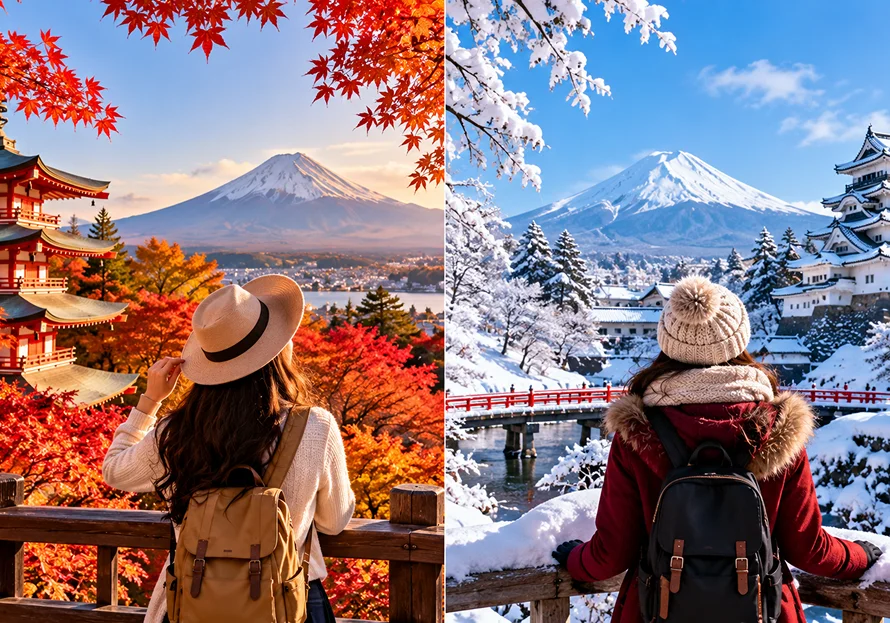
There’s a particular kind of daydream that hits when you start planning a Japan trip: snow drifting past a temple roof, or maple leaves scattering across a quiet canal. The tricky part is that Japan delivers both of these experiences brilliantly, just in completely different months. Deciding on Japan in winter vs autumn isn’t really about picking a “better” season; it’s about figuring out which version of Japan you’ve actually been picturing.
Both seasons offer plenty of reasons to visit, but winter and autumn ask very different things of a traveller. Autumn brings colourful foliage and generally comfortable sightseeing weather, while winter offers snow-covered landscapes, hot springs and excellent skiing. Let’s look at what each season offers so you can choose the right one for your holiday.
Japan in Winter vs Autumn: The Core Trade-Off
At the heart of it, this comes down to two very different Japans. Autumn brings comfortable walking weather in many regions, some of the country’s most photographed scenery, and colourful parks, temples and mountain landscapes. However, popular foliage destinations can get extremely busy during peak colour periods.
Winter offers a different atmosphere, with snow-covered scenery, outdoor hot springs and opportunities for skiing and snowboarding. Many major sightseeing areas can feel quieter outside the New Year holiday, although ski resorts can be extremely busy during school holidays and peak snow periods.
Neither season is the wrong choice. The question of Japan in winter vs autumn really comes down to whether you’re chasing autumn foliage and milder days or snow, winter activities and a different side of Japanese culture.
Best Time to Visit Japan: Autumn vs Winter Weather
When planning your trip, temperature is an important factor to consider when exploring the Best Places to Visit in Japan. However, weather conditions vary significantly across the country, with some regions experiencing mild autumn days while others face colder temperatures and snowfall during winter. Understanding these regional differences can help you choose the right destinations, pack appropriately, and make the most of your Japan travel experience.
Here’s a general comparison of what to expect:
Destination | Autumn (October–November) | Winter (December–February) |
Tokyo | Mild to cool, often comfortable for sightseeing | Cool to cold, with generally drier conditions |
Kyoto | Mild to cool, with autumn foliage arriving later in the season | Cold, particularly during mornings and evenings |
Hokkaido | Cool, with autumn arriving earlier than in much of Japan | Cold, with substantial snowfall in many areas |
Japanese Alps | Cool to cold, especially at higher altitudes | Very cold and snowy in many ski areas |
Autumn generally offers more comfortable conditions for walking and exploring, although temperatures can drop as November progresses. Winter conditions vary significantly: Tokyo and Kyoto are typically much milder than Hokkaido and the mountainous regions.
Rainfall, snowfall and daylight hours also differ by destination and month. Checking typical temperatures before you book can save you from packing the wrong layers. If you’re planning to visit multiple regions, prepare for changing conditions rather than assuming the entire country will have the same weather.
Autumn in Japan: Foliage, Comfort and Crowds
Autumn’s biggest drawcard is koyo, the Japanese autumn foliage season. During this period, maples and ginkgo trees turn deep red, orange and gold across parks, temple grounds and mountain valleys.
Kyoto becomes particularly picturesque, with temples such as Kiyomizu-dera and Tofuku-ji attracting visitors who want to experience the seasonal colours. Tokyo also offers beautiful autumn scenery in its parks and gardens, while destinations such as Nikko and the Japanese Alps are popular for mountain landscapes and foliage.
Hokkaido experiences autumn colours earlier than many other parts of Japan, making it worth considering if you’re travelling in October.
That popularity is autumn’s main downside. Peak autumn foliage periods can become extremely busy, particularly in Kyoto and other well-known sightseeing areas. Accommodation can book out well ahead of time, and popular viewing spots may be crowded.
The busiest dates vary because foliage arrives at different times across Japan. If you’re chasing red maple leaves against a traditional temple backdrop, autumn is the standout season for this experience, although peak colour varies by region and year.
Winter in Japan: Snow, Onsen and Quiet Streets
Winter offers a different kind of atmosphere. Many major sightseeing areas can feel quieter outside the New Year holiday, which may mean a more relaxed experience at some temples, gardens and city attractions. However, winter isn’t uniformly quiet, especially in destinations popular for snow sports.
Hokkaido and the Japanese Alps become major skiing and snowboarding destinations, attracting visitors from around the world. Niseko, in particular, is well known for its winter sports, while Nagano and surrounding mountain areas offer additional opportunities for snow activities.
Winter also brings experiences beyond skiing. Imagine soaking in an outdoor onsen while snow settles on the surrounding pines, exploring winter illuminations in Tokyo, or visiting Kyoto’s temples in the colder months.
The main exception to quieter winter travel is the New Year period. Japanese families travel during this holiday, while some shops, restaurants and attractions may operate on reduced schedules or close temporarily. Accommodation prices and transport demand can also increase around these dates.
Popular ski destinations can be especially busy during peak snow periods and school holidays, so booking early is advisable if skiing is a priority.
Where to Go in Japan in Autumn
If you’re planning Japan autumn travel, your destination can make a big difference to the experience.
- Kyoto: Visit temples, traditional gardens and historic streets surrounded by autumn foliage. November is often a popular period for viewing the colours, depending on the year.
- Tokyo: Explore parks, gardens and city attractions in generally comfortable sightseeing conditions.
- Nikko: Enjoy mountain scenery, colourful forests and seasonal landscapes outside the capital.
- Hokkaido: Consider an earlier autumn trip to experience foliage before it reaches many southern destinations.
- Japanese Alps: Explore mountain scenery, walking routes and traditional towns, keeping in mind that temperatures drop at higher elevations.
If foliage is your main reason for visiting, plan your itinerary around the expected timing of autumn colours at each destination rather than assuming every region peaks in November.
Where to Go in Japan in Winter
For Japan winter travel, the best destination depends on whether you’re looking for snow sports, city sightseeing or a relaxing winter escape.
- Hokkaido: A strong choice for skiing, snowboarding and snowy landscapes, particularly around popular resort areas.
- Nagano and the Japanese Alps: Ideal for snow sports, mountain scenery and winter experiences.
- Tokyo: Enjoy winter illuminations, shopping, restaurants and city attractions, with generally milder conditions than northern Japan.
- Kyoto: Explore temples, gardens and historic streets in a quieter winter atmosphere, while preparing for cold mornings and evenings.
- Onsen towns: Consider a traditional hot spring stay, especially in areas where snowy scenery adds to the experience.
If your priority is skiing or experiencing substantial snowfall, northern Japan and the mountain regions are generally better choices than Tokyo or Kyoto. If you prefer city sightseeing, winter can still be rewarding without visiting a ski resort.
Japan in Winter vs Autumn for Australian Travellers
For Australian travellers, the decision often comes down to school holidays, the type of holiday you’re planning and how much time you have available.
December and January travel: Australia’s summer holidays make this period convenient for families. However, Christmas and New Year travel can increase demand for flights and accommodation, while Japanese ski resorts can be particularly busy during peak snow periods.
Skiing or sightseeing: If you’re planning a summer escape that includes skiing or snowboarding, Japan’s winter season may be the obvious choice. If you prefer temples, gardens, city exploration and autumn foliage, travelling in October or November may suit you better.
Flight demand from Australian cities: Fares and availability vary by departure city, travel dates, airline and booking lead time. Comparing options from your departure city and remaining flexible with travel dates can help you find an itinerary that suits your plans.
Packing and daylight: Autumn usually calls for layers that can be adjusted throughout the day, while winter requires warmer clothing, particularly in northern Japan and mountain areas. Winter days are also shorter, so plan outdoor sightseeing around available daylight.
For Australian travellers, the best season isn’t necessarily the one with the mildest weather. It’s the one that fits your holiday dates, preferred activities and travel budget.
Golden Week: One Calendar Period to Know
Golden Week falls in late April and early May, so it doesn’t overlap with the autumn or winter periods discussed here. If you’re considering Japan outside those seasons, however, it’s one of the country’s busiest domestic travel periods and worth factoring into your planning.
Japan's Seasonal Holiday Calendar: What Else to Know
Understanding Japan’s holiday calendar helps explain why certain weeks can be busier than others, even outside the main sightseeing seasons.
New Year’s, spanning late December and early January, is particularly important when planning a winter trip. Expect increased travel demand, and check the opening hours of restaurants, shops and attractions around the holiday.
Silver Week refers to occasional clusters of public holidays in September when the calendar creates an extended break. It only occurs in some years, so check the dates for the year you’re travelling.
Autumn foliage periods can also affect crowds independently of public holidays. Checking both the holiday calendar and the expected foliage timing for your destinations can help you plan a more comfortable itinerary.
So, Which Season Actually Fits You?
Use this quick comparison to decide which season better suits your holiday plans.
If you want… | Choose |
Colourful autumn foliage | Autumn |
Skiing or snowboarding | Winter |
Generally comfortable walking weather | Autumn |
Snow and an onsen experience | Winter |
Potentially fewer crowds in major cities | Winter, outside major holiday periods |
Kyoto’s famous autumn scenery | Autumn, timed around foliage forecasts |
Better value outside ski areas | Winter can be worth considering, depending on dates |
A ski holiday during Australia’s summer | Japan’s winter season |
Budget-conscious and flexible on destination? Winter can offer better value in some cities outside major holiday periods, but popular ski resorts can be expensive during peak snow season. Autumn accommodation prices can also rise significantly around popular foliage destinations.
For a first trip, autumn can be a comfortable introduction to Japan if you want sightseeing and seasonal scenery. Winter may be a better fit if you’re interested in snow, skiing, hot springs or winter city experiences.
Book Smart for Whichever Season You Choose
Whichever way you land on Japan in winter vs autumn, flight timing matters just as much as the season itself. Demand can change around peak foliage weeks, Christmas and New Year, Australian school holidays and the ski season.
BookMyTrip helps Australian travellers compare Japan flights across departure cities, airlines, dates and fare options, so you can choose an itinerary that fits the season you’re travelling in rather than simply booking the first fare you see. Comparing available fares before booking can help you make a more informed decision.
Frequently Asked Questions
Is it better to visit Japan in autumn or winter?
It depends on your priorities. Autumn is the standout season for colourful foliage and generally comfortable sightseeing weather, while winter offers skiing, snow-covered landscapes and hot springs. Both are excellent choices for different types of holidays.
What is the best time to visit Japan for mild temperatures?
October is often a comfortable month for sightseeing, but conditions vary considerably by region. Hokkaido can be much cooler than Tokyo, and temperatures generally drop as autumn progresses.
Does winter in Japan get extremely cold?
It depends on where you go. Tokyo and Kyoto generally experience cool to cold winters, while Hokkaido and the Japanese Alps can be much colder and receive substantial snowfall.
Is Japan expensive in autumn?
It can be, particularly during peak autumn foliage periods in popular destinations such as Kyoto. Accommodation prices and availability depend on your travel dates, destination and how early you book.
Is Japan expensive in winter?
Winter costs vary by destination. Some cities may offer better value outside major holiday periods, but popular ski resorts can be expensive during peak snow season. Christmas, New Year and school holiday dates can also affect demand.
When is autumn foliage in Japan?
The timing varies by region and year. Hokkaido typically experiences autumn colours earlier than many southern destinations, while popular viewing periods in Kyoto can occur later in autumn. Check regional foliage forecasts before finalising your itinerary.
Where is the best place to see snow in Japan?
Hokkaido and the Japanese Alps are popular choices for snowy landscapes and winter activities. Hokkaido is particularly well known for skiing and snowboarding, while mountain destinations around Nagano also offer excellent winter experiences.
Is Hokkaido better in winter or autumn?
Choose winter if you want skiing, snowboarding and snowy landscapes. Autumn is better for colourful foliage and cooler-weather sightseeing before the main snow season. Your ideal timing depends on the activities you want to prioritise.
Is Japan crowded in autumn?
Popular destinations can become very busy during peak foliage periods, especially Kyoto’s well-known temples and gardens. The busiest dates vary because autumn colours arrive at different times across Japan.
Is Japan crowded in winter?
Some major sightseeing areas can feel quieter outside New Year, but this isn’t true everywhere. Ski resorts can be extremely busy during peak snow periods and school holidays, so book popular winter destinations early.
Should I avoid Golden Week when planning a Japan trip?
If you’re travelling in late April or early May, it’s worth planning around Golden Week because domestic travel demand can be high. It doesn’t overlap with autumn or winter, but it matters if you’re considering a trip during spring.
Is winter a good time to visit Japan if I don't ski?
Absolutely. Winter illuminations, hot springs, city sightseeing and visits to temples can make for a rewarding trip without skiing. Choose destinations that suit your interests and prepare for colder weather.
How far in advance should I book a Japan trip for autumn or winter?
Booking several months ahead is a sensible starting point for popular autumn foliage destinations and peak winter ski resorts. For Christmas, New Year and Australian school holiday travel, compare flights and accommodation early. You may have more flexibility for some cities outside major holiday periods, but availability depends on your dates and destination.